


Cloud Security & Edge Computing Convergence: The Next Enterprise Architecture Shift
Modern enterprise infrastructure is rapidly evolving toward distributed computing models where cloud environments and edge systems no longer operate as separate layers but instead function as a single integrated ecosystem. This convergence is being driven by increasing demands for real-time processing, low-latency decision making, and highly secure data exchange across geographically dispersed systems. Organizations are no longer designing systems around centralized data centers alone but are instead building intelligent architectures that distribute computation closer to the source of data generation while still maintaining centralized governance and security control across all operational layers.
Cloud security in this new paradigm is no longer limited to perimeter defense or isolated identity management systems but extends into continuous verification of workloads, APIs, containers, and microservices that may dynamically move between cloud regions and edge nodes. This requires a shift toward policy-driven security enforcement where every transaction is evaluated in real time based on contextual signals such as workload behavior, device trust levels, encryption posture, and network telemetry. As a result, security becomes an always-on function deeply embedded into the infrastructure rather than an external protective layer applied after system deployment.
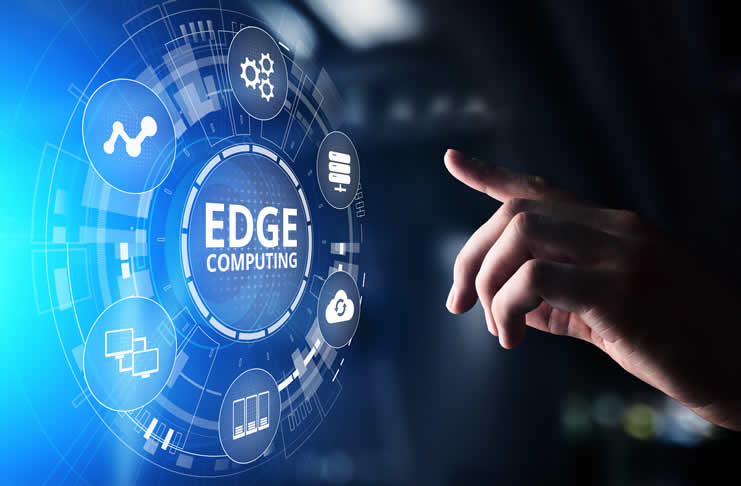
The future of infrastructure security is defined by continuous trust evaluation across distributed systems.
Why Cloud and Edge Must Work Together
The separation between cloud computing and edge computing is becoming increasingly artificial as modern applications demand seamless interaction between centralized intelligence and localized execution environments. Edge systems handle real-time data ingestion, filtering, and response actions, while cloud platforms provide large-scale analytics, machine learning processing, and long-term data storage capabilities. When these two environments are not properly integrated, organizations experience delays, inefficiencies, and security gaps that can be exploited by adversaries targeting weak synchronization points between distributed systems.
By tightly coupling cloud and edge infrastructures, enterprises can ensure that data flows securely and efficiently across all processing layers while maintaining consistent security enforcement policies. This unified approach allows decisions to be made closer to where data originates without sacrificing the analytical depth and scalability offered by centralized cloud environments. The result is a more responsive, resilient, and intelligent architecture capable of supporting modern digital workloads.
Security Challenges in Distributed Systems
Distributed architectures introduce significant complexity in terms of security management because data is no longer confined to a single controlled environment. Instead, it moves across multiple networks, devices, APIs, and third-party services, each introducing potential vulnerabilities that must be continuously monitored and controlled. Traditional security models struggle to maintain visibility across such fragmented ecosystems, leading to blind spots that attackers can exploit to gain unauthorized access or escalate privileges within the system.
Another major challenge is maintaining consistent identity and access control policies across cloud and edge environments. Without unified identity governance, users and systems may inherit inconsistent permissions depending on where they interact with the infrastructure. This inconsistency creates security gaps that weaken the overall trust model and increase the risk of data exposure or system compromise. Addressing this requires centralized identity frameworks that operate across all layers of the distributed architecture.
Role of Automation and AI in Security
Automation and artificial intelligence are becoming essential components of modern cloud-edge security frameworks due to the scale and speed at which distributed systems operate. Manual monitoring and response mechanisms are no longer sufficient to detect and mitigate threats in real time, especially when dealing with high-volume data streams and dynamic workload environments. AI-driven systems enable predictive threat detection by analyzing behavioral patterns and identifying anomalies before they escalate into full-scale security incidents.
Automated response mechanisms further enhance security by executing predefined mitigation actions instantly when suspicious activity is detected. These actions may include isolating compromised nodes, revoking access credentials, or redirecting network traffic through secure pathways. By reducing human intervention in critical security workflows, organizations can significantly improve response times and minimize the impact of potential breaches across distributed infrastructure environments.
Conclusion
The convergence of cloud computing and edge computing represents one of the most significant shifts in modern enterprise architecture. As organizations continue to adopt distributed systems, the need for unified security frameworks, intelligent automation, and continuous trust evaluation becomes more critical than ever before. This transformation is not simply a technological upgrade but a fundamental redefinition of how digital infrastructure is designed, deployed, and secured in an increasingly connected world.
Enterprises that embrace this convergence early will be better positioned to achieve higher performance, stronger resilience, and improved security across their digital ecosystems. By integrating cloud and edge environments under a unified security model, organizations can build scalable, adaptive, and future-ready infrastructures capable of supporting the next generation of digital innovation while maintaining robust protection against evolving cyber threats.
Leave a Reply